Product and solution consultation phone number:+86\086-18595517036((Same number on WeChat))

The Application of Ultra-Wideband Technology in Autonomous Driving
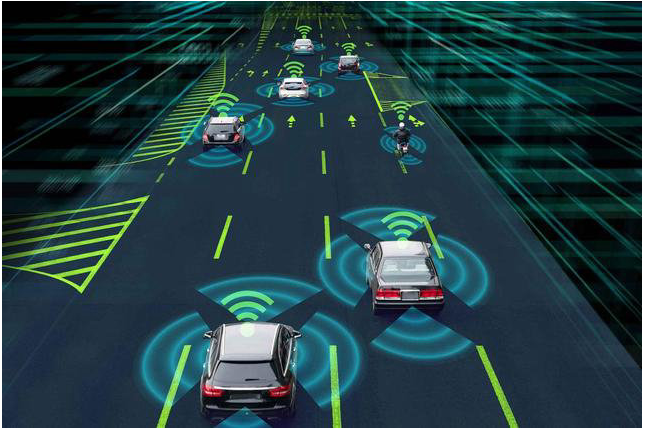
Environmental Characteristics: While differential RTK can improve GPS positioning accuracy in outdoor environments, autonomous driving faces technical challenges when GPS signals are unavailable in areas such as between buildings, in long tunnels, and in indoor parking garages. Although odometers and gyroscopes can temporarily compensate for the absence of GPS signals, they are prone to cumulative errors, and correcting these errors presents significant difficulties. Consequently, there is an urgent need for key technologies to support autonomous driving in indoor environments.
Solution:Ultra-wideband (UWB) precision positioning technology differs from other wireless positioning technologies. It offers a range of advantages, including high positioning accuracy, excellent concealment, strong resistance to multipath and narrowband interference, high system capacity, low power consumption, low system complexity, and a certain degree of penetration capability. It enables precise positioning in complex environments such as indoor spaces, tunnels, and underground areas, addressing the limitations of GPS in complex environments and indoor settings where it cannot provide positioning.
Application Scenarios:
Positioning and Navigation for Autonomous Vehicles in Tunnel Environments
Autonomous vehicle positioning systems integrate GPS, UWB precision positioning systems, and inertial navigation systems to achieve full-area positioning. When a vehicle enters a tunnel and loses GPS signal reception, the system switches to a fusion of UWB precision positioning with inertial navigation and other sensor systems, thereby enhancing system stability and reliability.
Positioning and Navigation for Autonomous Vehicles in Indoor Parking Garages
GPS positioning and navigation become completely ineffective in indoor parking garages. Relying solely on inertial navigation or visual positioning makes it difficult to meet the positioning accuracy requirements of autonomous vehicles. In such environments, the UWB precision positioning system leverages its high-precision capabilities to ensure the reliability and stability of the autonomous vehicle positioning and navigation system.
Previous Smart Construction